
Table of Contents:
State and federal agencies are tasked with distributing unprecedented volumes of funding under tighter deadlines than ever before. Legacy tools such as static spreadsheets and disjointed email threads can create silos and limitations that hinder grant management. Scalable grant management software streamlines the process, helping your organization handle significant funding mandates efficiently.
For government grant managers, scalability means enabling systems to handle complex data relationships. A truly scalable system functions with the same speed and stability whether you manage a pilot program with 50 applicants or a statewide infrastructure initiative with 5,000 complex multi-year awards.
The right software can help your organization master the three dimensions of scalability:
Cloud-based Software as a Service models are much more scalable than rigid on-premise hardware. Cloud scalability allows your agency to increase resources during peak application periods without investing in physical servers that would remain idle the rest of the year.
Scalable software allows your agency to configure new compliance fields, such as those required by the Grant Reporting Efficiency and Agreements Transparency Act, instantly. Legacy systems, such as spreadsheets, paper-based applications and disparate databases, often require a complete code overhaul to comply with new laws. Replacing these outdated methods helps prevent inefficiencies, such as data duplication, error proneness and challenges with collaboration.
A scalable solution future-proofs your systems for changing legislation. The National Association of State Chief Information Officers identifies legacy modernization as a top priority for CIOs because it supports digital transformation.
Scalability is vital as the grant funding landscape becomes more complex. Recent drivers and legislation, such as the Infrastructure Investment and Jobs Act and a focus on specific national priorities, have led to unprecedented volumes of funding. Large-scale funding initiatives come with greater accountability, making your grant management strategies a vital part of your agency’s public perception.
These are the primary benefits of scalable grant management software:
With scalable software, your organization can significantly shorten the timelines between receiving applications and awarding funds. The faster your agency awards grants, the faster you can deliver funds to communities in need.
A scalable system helps your agency handle high velocity of capital. Scalable software automates the initial eligibility scrub of an application, verifying tax status, certifications, Data Universal Numbering System numbers and geographic eligibility rapidly. This allows your program managers to narrow their reviews and focus only on qualified applications.
A scalable system permanently logs every interaction, document upload and approval timestamp, serving as a single source of truth. Its digital export process eliminates the need to gather paper files, allowing you to reduce costs and staff hours. Your organization’s teams can trust that information is accurate and ready for audits such as the following:
Automation handles repetitive, busy work, such as performing status checks, gathering aggregate data and sending out programmatic updates. This frees your team to spend more time and attention on essential tasks and higher-value activities such as grantee support, program design and impact analysis.
By automating minor tasks, you can assign more grant programs to each person. This helps address staffing shortages, equipping your agency to handle greater application volume and complexity with fewer employees.
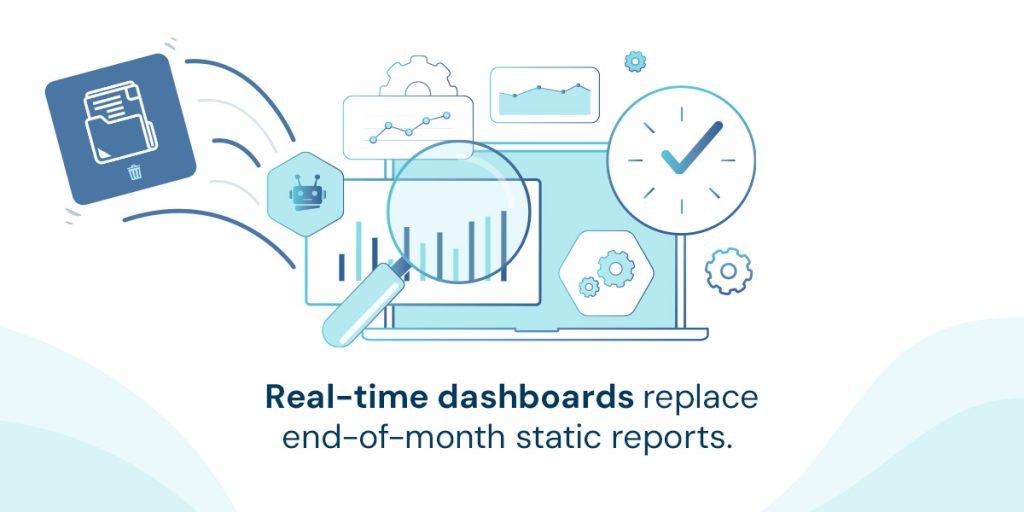
Real-time dashboards replace end-of-month static reports. With a scalable grant management program, agency directors and stakeholders can view the following information quickly and easily:
This visibility empowers data-driven decision-making for program adjustments and future funding strategies.
Similar to how businesses cater to the customer experience in the private sector, government agencies must cater to the sub-recipient experience in the public sector. Scalable software ensures your public-facing portal remains stable and responsive, even during high-traffic surges. This helps your agency maintain good PR, transparency and trust.
A positive sub-recipient experience can have these long-term positive impacts:
To provide a stable and responsive portal for users, ensure your software has an intuitive interface, clear instructions, self-service options and fast loading times. Scalable systems offer these features, making it easy to facilitate user-friendly experiences.
When you have a legacy system, your agency may only have one or two staff members who understand the complexity of spreadsheets. With a scalable system, your entire team can learn how to manage data, applications and changes. Modern systems distribute knowledge and reduce reliance on individual experts. You can continue to rely on your systems and processes, even if staff members familiar with Excel are unavailable.
Emailing different budget versions to multiple staff members can be challenging. Scalable software hosts live data, allowing users to access information from one centralized platform. This eliminates the complications associated with email-based version control, such as conflicting edits, lost comments and outdated documents. A centralized platform means everyone is always working on the most current version, complete with revision history for reference.
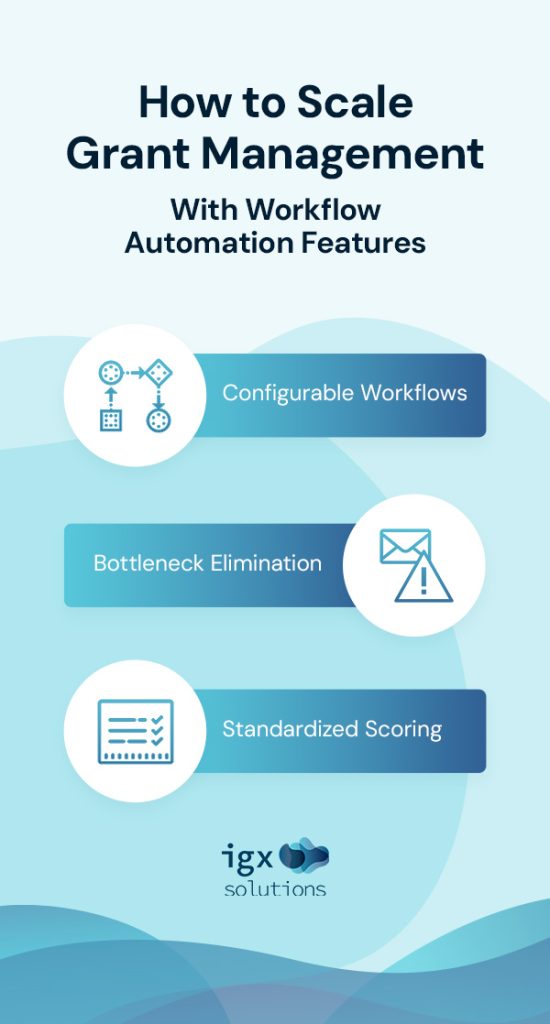
Workflow automation scales grant management with the following features:
Different types of grant programs might have vastly different workflow needs. For example, large infrastructure projects involve more steps and details than small community grants.
A scalable system enforces a logical path to ensure each eligible application goes through vital steps. This structure follows application submittal, auto-check eligibility, program manager review, finance director approval and executive sign-off. The configurability of modern systems makes it easy to customize each workflow and meet precise project requirements.
Scalable grant management software features passive project management capabilities. It can automatically trigger email notifications when a task remains in a reviewer’s inbox for an extended period. This helps your agency process each application in a timely manner.
Removing subjective bias from the grant application review process is essential. Scalable systems provide digital scorecards where reviewers can select specific criteria on scales. The system then calculates the weighted average, ensuring your agency applies the exact same standards to each grant. Objective scoring reduces bias and improves the equity of grant distribution. It enhances fairness and legal defensibility and helps identify the best-fit projects for each grant.
While the grant application phase is important, the post-award phase typically lasts years and requires just as much attention and management. You can use a scalable grant management solution to handle monitoring and reporting tasks:
Scalable software allows sub-recipients to submit financial claims digitally. The system can automatically validate claims against the approved budget, matching approved budget line items with expenditure categories and attaching the required documentation. For example, it can prevent recipients from requesting $5,000 for travel if they only have $2,000 remaining in that line item. This reduces manual effort for your agency’s employees and sub-recipients.
Automating risk assessments allows your agency to manage thousands of active grants. The software can flag high-risk grantees who are late on reports, enabling your staff to intervene early. Automated software flags risk factors such as consistent late reporting, unusual expenditure patterns and discrepancies in financial submissions. This early intervention helps prevent fraud, improve program success and protect public funds.
A scalable solution automates the final reconciliation of funds — no unspent dollars are left unused. This eases the administrative process of closing out federal grants, making it easier to manage complexities such as compliance checks, financial reconciliation and document archiving.
Security is crucial, especially as you scale with more users. Scalable software enhances security with the following features:
Use these tips on scaling grant management software to prepare your agency’s data, systems and employees for scale:
Tailoring your system’s workflows, settings and fields to match your agent’s unique processes and reporting needs is vital. Proper configuration allows you to customize end-user roles, data fields, and access permissions without writing new code. It provides the agility necessary for growth and changing requirements, helping your agency maximize impact and minimize administrative burden.
Generic grant management tools may seem flexible, but they typically require extensive custom coding to handle the unique regulatory complexities of government funding. True scalability requires native configuration, allowing your agency to adapt to new legislative requirements without relying on expensive vendor change orders. Focus on the following factors for effective configuration:
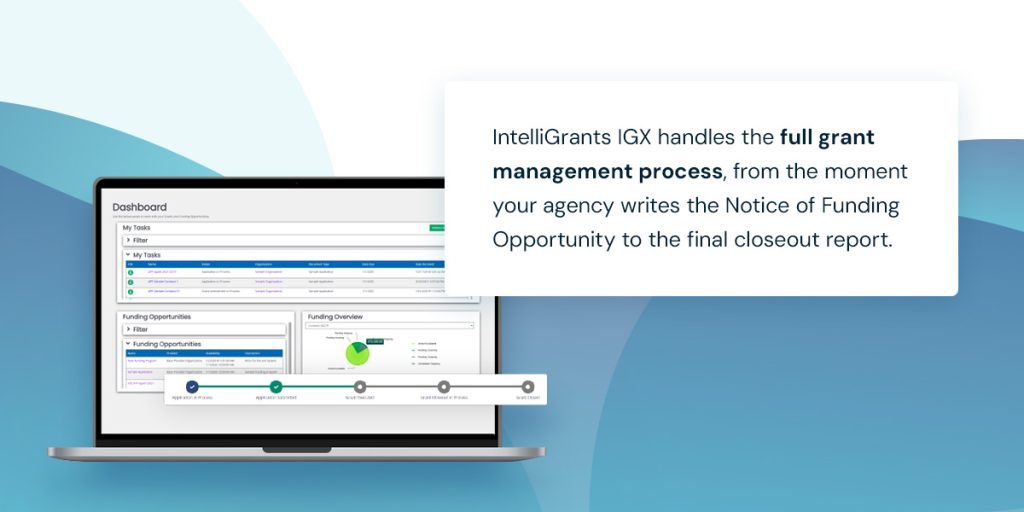
IntelliGrants IGX handles the full grant management process, from the moment your agency writes the Notice of Funding Opportunity to the final closeout report. Your organization can depend on this solution for the following advantages:
Scalable grant management is vital for modern government agencies. A scalable solution, such as IntelliGrants IGX, shifts your team’s focus from managing paperwork to managing impact. Book a free demonstration or check out a preview of our platform below to learn more about IntelliGrants IGX and how you can tailor its workflow configuration to your specific agency needs.